Scaling at Absolute Zero
A quantum computer operates colder than outer space – and right now, most of that frozen space is wasted on components that are simply too big. YQuantum is changing the ratio. The company was the 100th startup to join the Kickfund portfolio, and it has already gained significant traction.
The cat is both dead and alive: quantum mechanics feels unintuitive, yet it’s the true nature of our world. While classical physics describes the reality we can see and touch, the rules change at the atomic and subatomic level. A particle at that scale exists in a superposition, in multiple simultaneous states, until it’s measured.
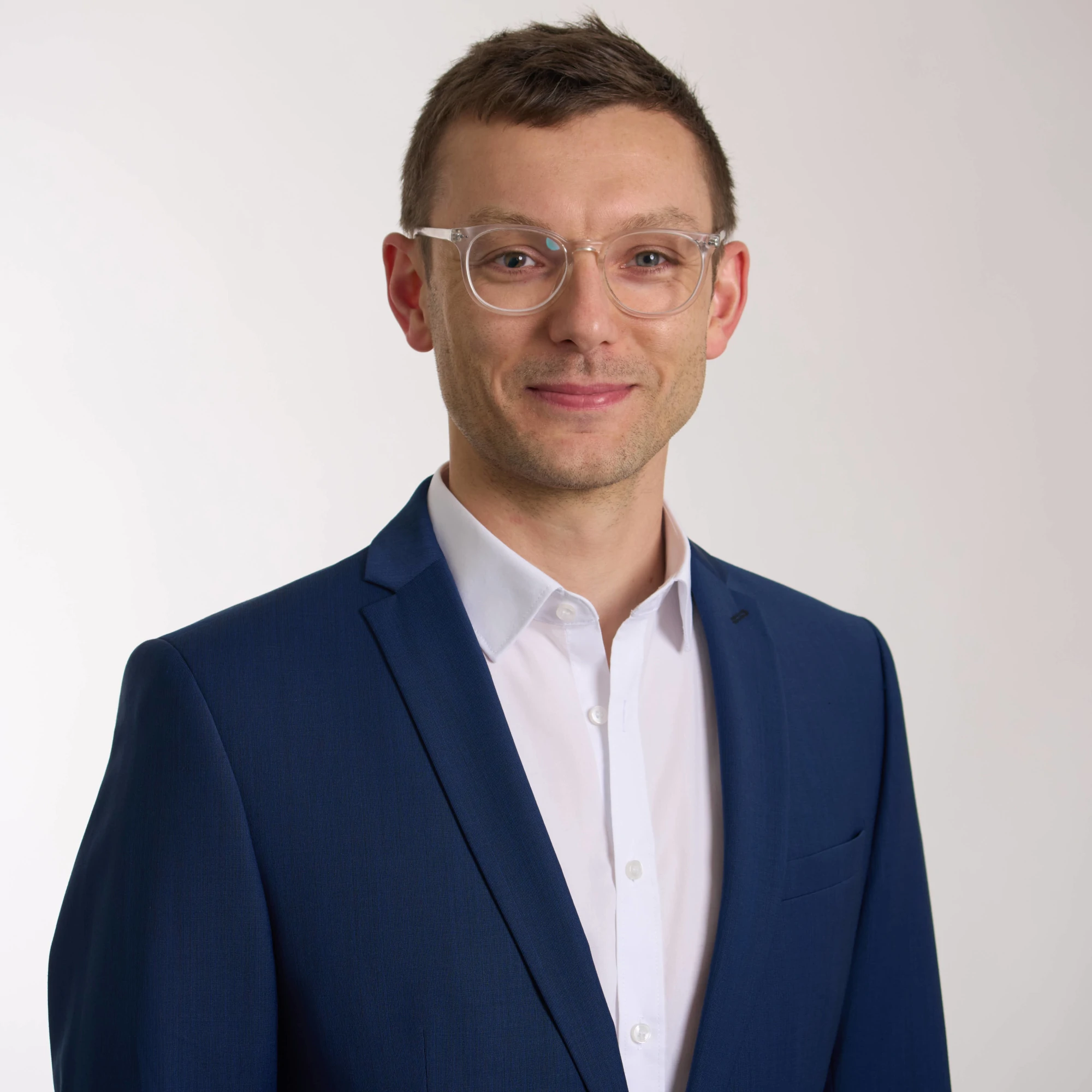
To create a truly accurate simulation of the world, we need a computer that follows quantum logic, points out YQuantum’s CEO and Co-Founder, Christian Jünger. With good enough quantum computers, we can simulate molecules to work with complex chemical systems. Drug development is the most often cited use case: pharma companies need to understand how a candidate molecule will interact with a target protein in the body. In industrial chemistry, quantum-level simulation lets us design better catalysts, for example.
True randomness is one of quantum mechanics' most striking features, Christian adds. A classical computer follows an algorithm to decide what counts as random, while a quantum state simply is random. That will reshape how we think about encryption: stronger keys grounded in genuine randomness, and quantum channels that make distributing them inherently more secure.
Quantum sensing is the application closest to becoming reality, Christian says. The rest of the field, however, could use a reality check: Christian notes that quantum computing has become a buzzword. Today's marketing claims about “quantum-enhanced” technologies sound exciting, yet often a regular laptop would solve the same problem faster and cheaper. The real issue is qubit quality and system performance. Current quantum computers have around one hundred qubits, but qubit count alone isn't enough. We'll need hundreds of thousands – more likely millions – of high-quality qubits working together as a coherent system before we can tackle real-world problems that are unsolvable with classical supercomputers.
Quantum computing needs to happen near absolute zero. There is a physical limit to how large a container we can cool down to such temperatures, and currently that’s around one cubic meter. Everything – the quantum processor, amplifiers, filters, cables – has to fit inside. Today, the components surrounding the processor take up most of the volume, Christian says. The ratio is similar to classical computers in the 1960s, when we built entire rooms to house very modest processing power.
Cue YQuantum: the company specializes in miniaturizing those large hardware components, such as the packaging for the quantum processor, the amplifiers, or the signal filters. Classical computers made the journey from packed rooms into pocket devices. Eventually, YQuantum wants to fit all necessary components onto a single, integrated chip, Christian elaborates.

Swiss Sundays beat Silicon Valley hustle
Christian is a physicist by training: he did his PhD at the University of Basel on superconductors and a three-year postdoc at UC Berkeley researching novel superconducting qubits. This stint dropped the academic researcher in the middle of the Silicon Valley scene: UC Berkeley works closely with startups, and one of the large quantum computing companies was just down the road.
In Silicon Valley, people celebrate pretty much any idea, Christian observes. In Switzerland, on the other hand, founders face much more scrutiny. When YQuantum had to create a business plan as part of the Venture Kick program, Christian asked a Silicon Valley friend for help. The experienced entrepreneur had built a successful startup over many years, yet no tips for Christian: the friend had never had to make a business plan.
If Christian could have all that cheering and much less oversight in Silicon Valley, why did he return to Switzerland and decide to start his company here? The reason is cultural. “I saw CEOs suffering under huge pressure, and they couldn’t afford to take even a small break”, Christian explains; a Sunday in the US looks just like a Monday. This is not sustainable: Christian wants to go to the beer garden with his colleagues, enjoy his weekends, take holidays, and come back recharged and his head full of new ideas. He can have all that in Switzerland, even when steering an ambitious startup.
And putting together that business plan was in fact useful, Christian laughs. The process forced him to sit down and really think about what he was doing, and then he received a lot of helpful feedback from the Venture Kick experts.
Discovering problems worth solving
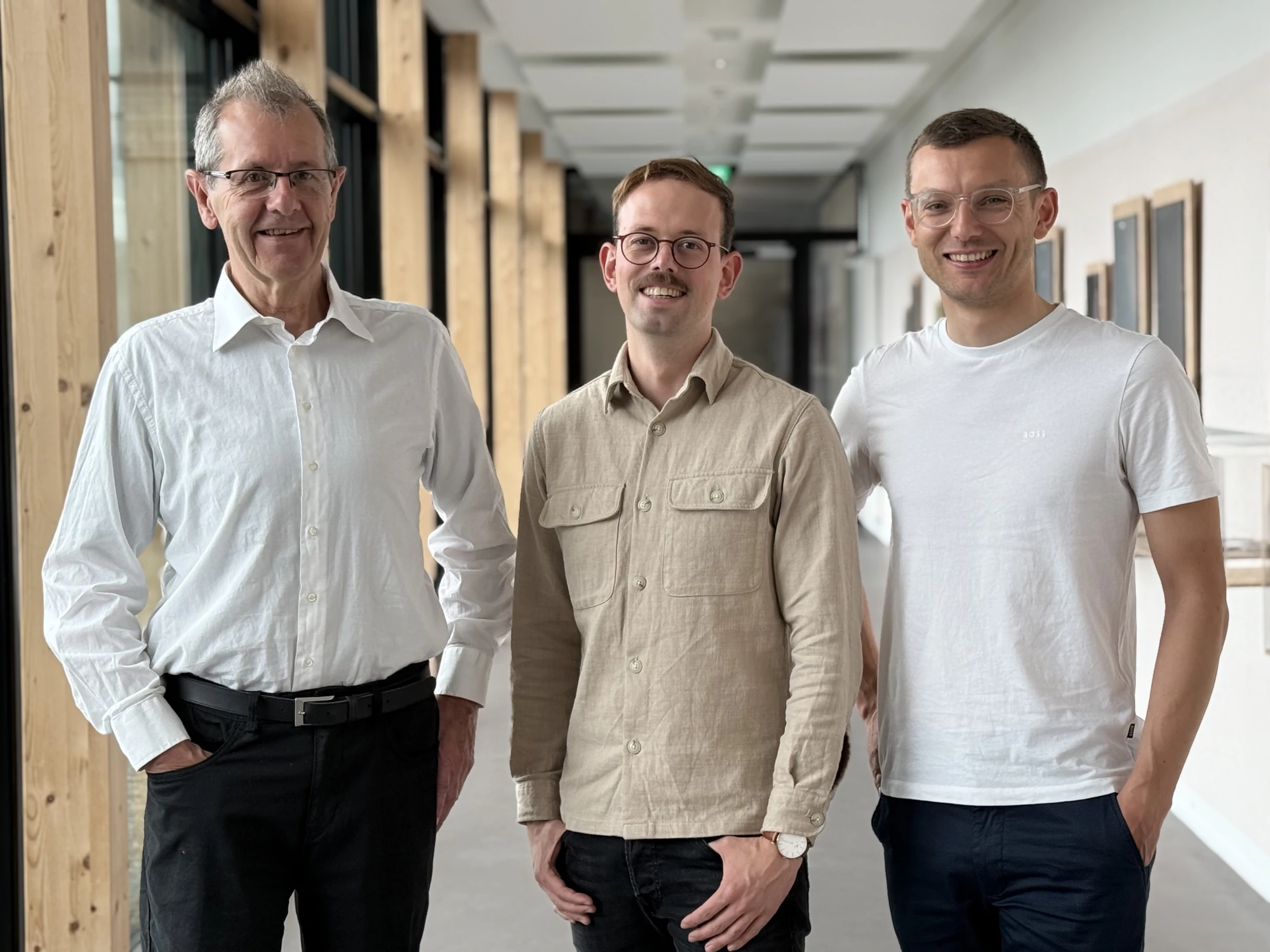
When Christian returned to Switzerland after Berkeley, he joined a quantum software company in Zurich. This is where he met Johannes Herrmann, an RF hardware engineer and a PhD graduate from ETH Zurich. The two enjoyed working together, and soon they came up with the vision for a quantum hardware company. The young founders-to-be shared their thoughts with Christian’s PhD thesis supervisor, Christian Schönenberger, for feedback and a sanity check. The senior Christian did more than just commend the business idea: he wanted to join the venture. “I’m retiring next month, let’s go”, was his reaction. The three men founded YQuantum in September 2024.
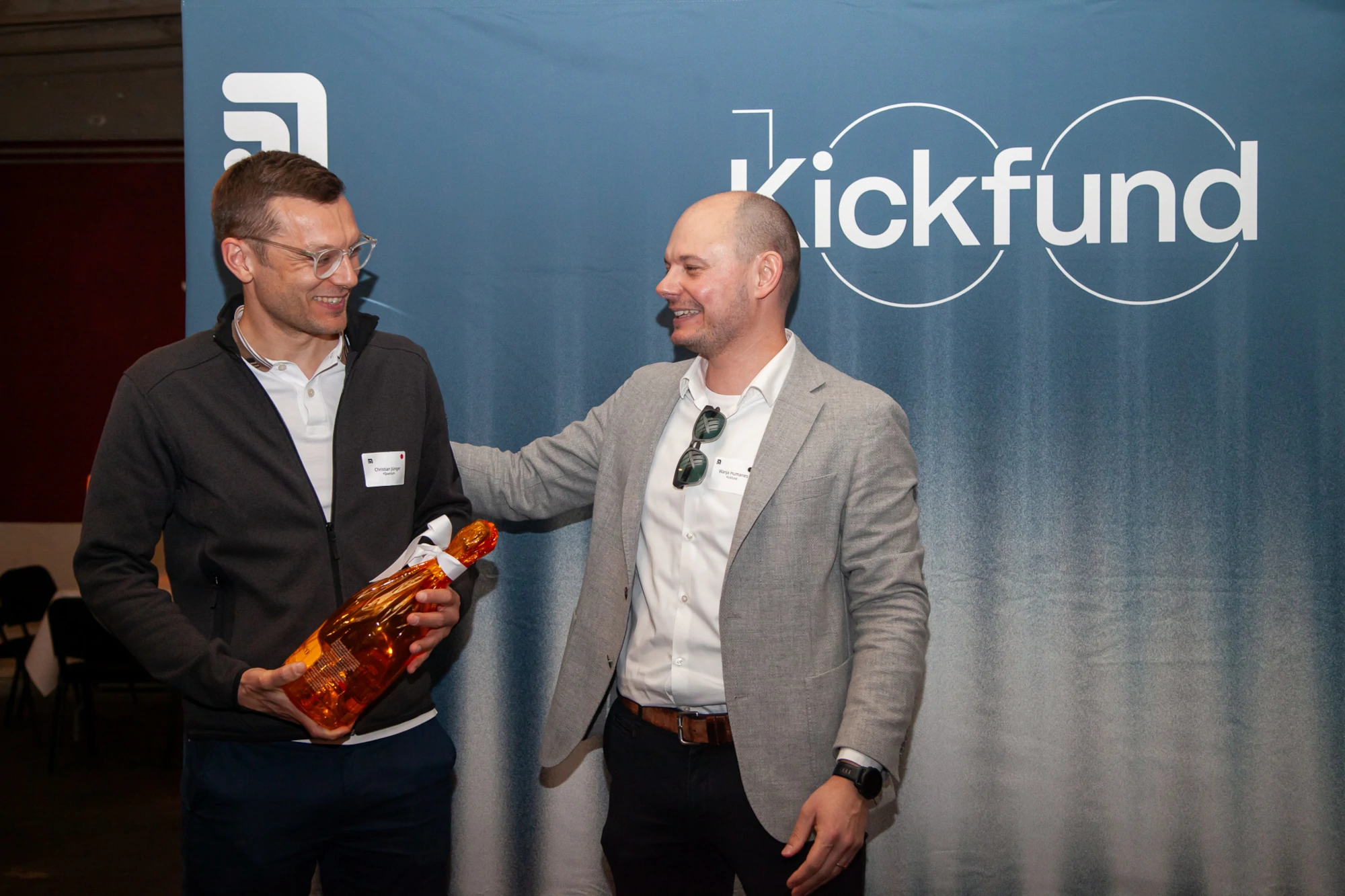
YQuantum graduated from Venture Kick in November 2025 and joined the Kickfund portfolio in January 2026 – as the 100th company. The company has been operational since the beginning of 2025, and it has gained significant traction in a short amount of time. YQuantum is running some long-term research projects supported by a couple of grants, but otherwise the eight-person team is living off revenue from pilot projects, while the company's actual flagship product is still under development. The second half of 2025 saw good early sales, and Christian says 2026 has kicked off very well, too.
Such early profitability is impressive for a deep-tech hardware firm, where upfront costs are usually high and lead times long. The founders were able to hit the ground running. Christian explains he and Johannes have a complementary skillset – he himself coming from the bottom up, building quantum processes, and Johannes having measured and characterized the largest possible quantum systems. Between the two of them, the company already had enough technical competency to build products that addressed actual problems. They built a functional prototype early, and then the three founders tapped into their vast, combined networks. The audience was sold right from the start.
Not that Christian is losing sleep over quantum computing's slow pace, either: YQuantum is well diversified. There are multiple competing approaches to quantum computing, each trying to maintain quantum coherence through entirely different physical systems. As a technology-agnostic component manufacturer, YQuantum will be able to support all of these approaches.
Even if quantum computing never kicks off, YQuantum has competences and technologies that can change industries. Their components survive the same brutal temperature swings you find in satellites, and their RF frequency range lands squarely in telecommunications territory too.
This is what deep tech means at its core: building something before anyone knows exactly what it's for – and being okay with that. Christian clearly is. 'We might discover problems we didn't even know were worth solving,' he says.