Finding the Needle in the Waste Stack
Waste might not be the sexiest business, but Jaipur Robotics founder Ermes Zamboni describes it as his life’s passion. Jaipur helps waste-to-energy plants identify dangerous materials before they cause an expensive shutdown. This is an economically and environmentally massive need no other company has solved before. Investors agree, and Jaipur just closed a EUR 4.3M financing round.

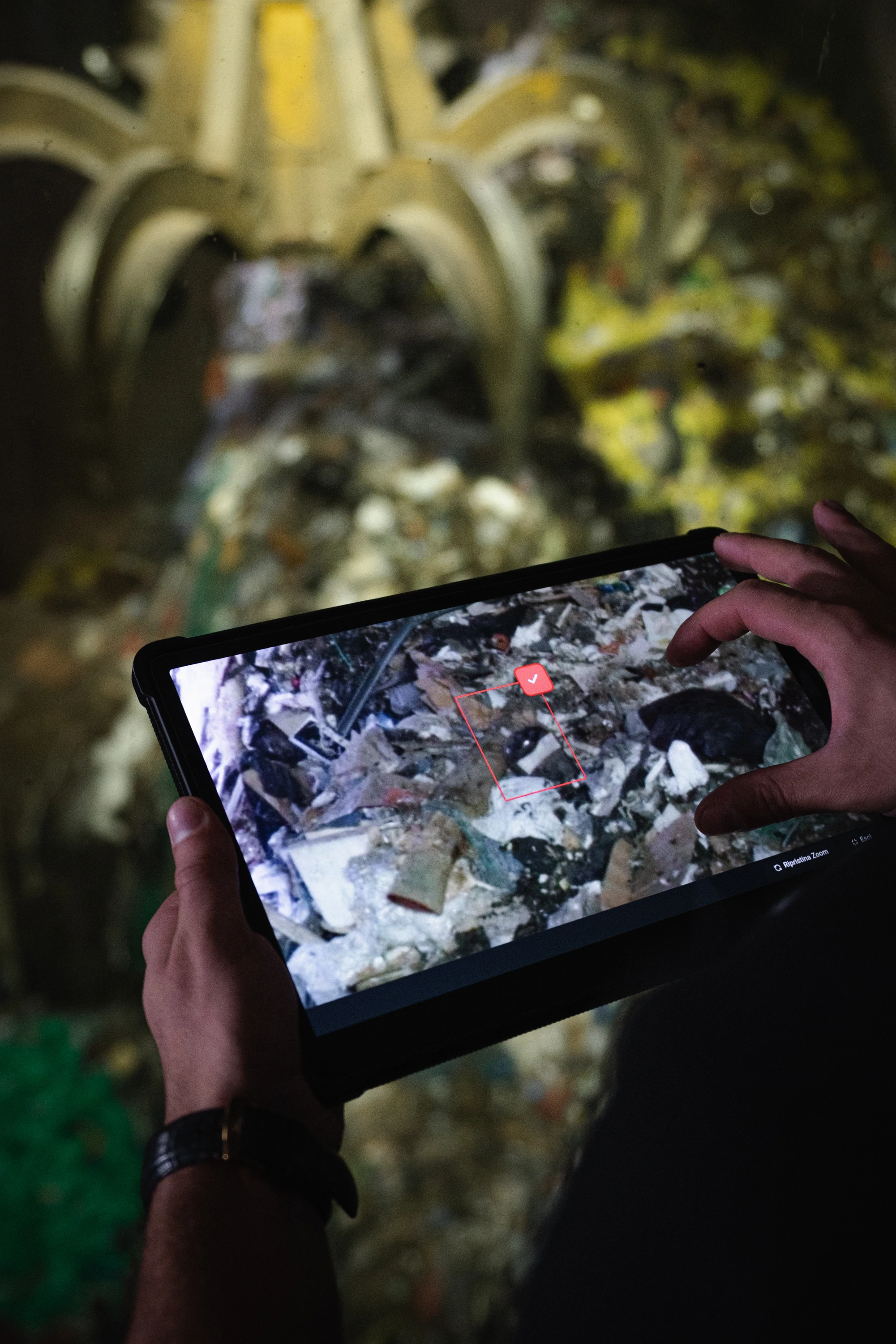
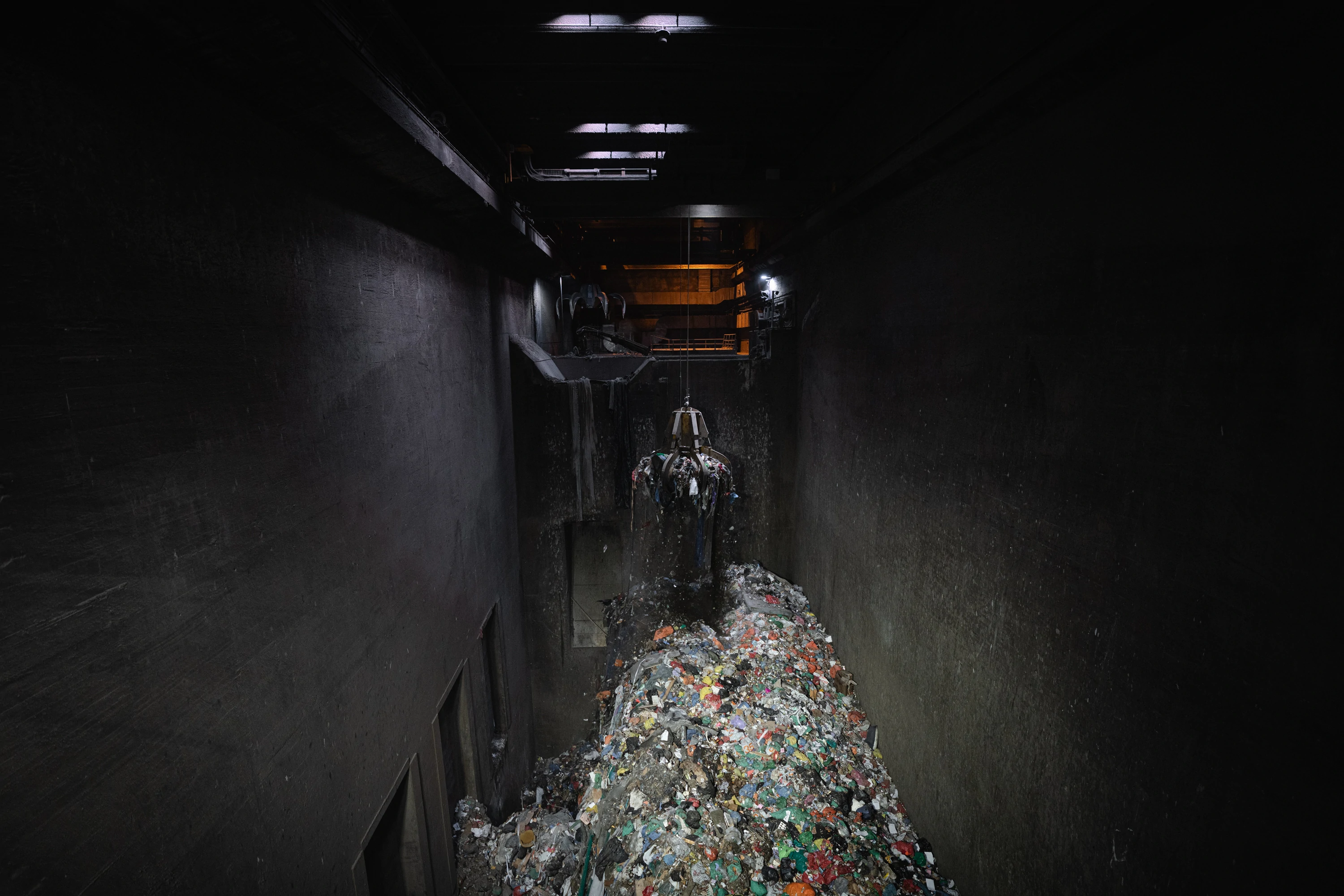
Roughly half of all the waste we produce in Switzerland is recycled; the other half gets burned to produce heat and electricity. Tossing combustible waste into a landfill has been illegal in Switzerland since 2000, and the country has 29 waste-to-energy plants that process hundreds of tons of waste every day. Whether it’s a Züri-Sack picked up on garbage day, off-cuts from a textile factory, or plastic film peeled off cardboard at a recycling center, it ends up in a combustion chamber at one of these plants.
The system works beautifully, in theory. In practice, the waste delivered for incineration often contains items that shouldn’t be there. These cause trouble at different stages. A large block of concrete gets stuck in the feeding flow and creates a fifty-meter waste jam; a small gas bottle explodes in the combustion chamber and destroys it. In the best-case scenario, the entire plant gets shut down for at least eight hours; it might even take several weeks of downtime to fix the damage.
Such incidents happen five to ten times a year at a waste-to-energy plant, says Ermes Zamboni, Co-Founder and CEO of Jaipur Robotics. Ermes once saw a waste-to-energy plant lose 65 million euros to gas bottle explosions in the combustion chamber.
Jaipur’s software platform uses computer vision and deep learning to monitor waste-to-energy plants in real time. Cameras installed throughout the facility scan the waste bunker continuously, detecting hazardous contaminants before they cause trouble. Ermes says many computer vision companies help recycling facilities identify misplaced objects on a conveyor belt. But to find a twenty-centimeter gas bottle in a hundred-meter mountain of waste is a challenge no other company has dared to touch yet.
Investors have also noticed this. Jaipur Robotics just closed its second financing round, led by EquityPitcher and High-Tech Gründerfonds. Other participants include Zürcher Kantonalbank, Business Angels Switzerland, and Kickfund. Ermes laughs that most investors he approached didn’t even know what waste-to-energy plants were, but they got excited as soon as he described the impact.
Waste is one of humanity’s greatest challenges
Ermes studied robotics at the Politecnico di Milano, with an exchange at ETH Zurich. His Swiss sojourn also included the Lean Startup Academy, an entrepreneurial course for ETH students. At the start of the course, each participant pitched a business idea to recruit a team from among the other students. Ermes made a bid for a wastebin that uses computer vision to segregate the waste, and one of his recruits was Nikhil Prakash, the future co-founder of Jaipur Robotics.
The wastebin idea didn’t come out of nowhere; Ermes describes waste as his personal passion and one of humanity’s greatest challenges. As an Italian, he has seen the results of poor waste management. But the problem is not limited to local indiscretions. “We’re killing our planet, we’re polluting our oceans, and we’re polluting ourselves with microplastics”, Ermes laments. “We generate a gargantuan amount of waste and ship it to countries that have no infrastructure for processing it. We’re literally sweeping our trash under the carpet.”
The ETH entrepreneurship course ended in due time, but the future founders continued developing the wastebin business as a side hustle even as Ermes moved to Germany and Nikhil to the United States. Then, in 2023, Ermes heard about the Boldbrain Startup Challenge in Ticino. He decided to take a risk and give the waste business a real chance. He left his well-paying full-time job and moved to Switzerland to join the accelerator. At the end of the Ticino program, Ermes and Nikhil co-founded Jaipur Robotics in Lugano. The year was 2024.
The jump from nurturing a side hustle into becoming a full-time entrepreneur was the first big decision Ermes had to make; the second one was pivoting the business. As Ermes was presenting Jaipur’s wastebin in Milan, a local waste-to-energy plant manager invited the founder for a tour of his facility. The manager believed Jaipur’s technology could solve challenges in his industry. Curious by nature, Ermes jumped at the opportunity, asked a lot of questions, and then called his co-founder the moment he stepped out of the building. Jaipur was going to pivot into waste-to-energy.
Jaipur’s wastebin had won some interesting pilots, but no large sales contracts. The change of direction was strategic more than technical; the software was already capable of addressing the new challenges. Armed with a redefined target industry and a clearer business case, it didn’t take Ermes long to sign Jaipur’s first waste-to-energy customer. The snowball started rolling: Jaipur got scouted into the exclusive Berlin-based accelerator Techstars, which opened doors and helped the company close its first financing round in early 2025. Later that year, Jaipur also graduated from Venture Kick and joined the Kickfund portfolio.
“We have followed Ermes and Nikhil since Venture Kick, and I admit I first had some reservations about the market opportunity”, says Wanja Humanes, Managing Partner at Kickfund. “But Jaipur tackles a pain point operators feel immediately: the high price tag of an unplanned shutdown. That is the right place to enter the market, and doubling down in this round was an easy decision for us.”
Preparing for growth
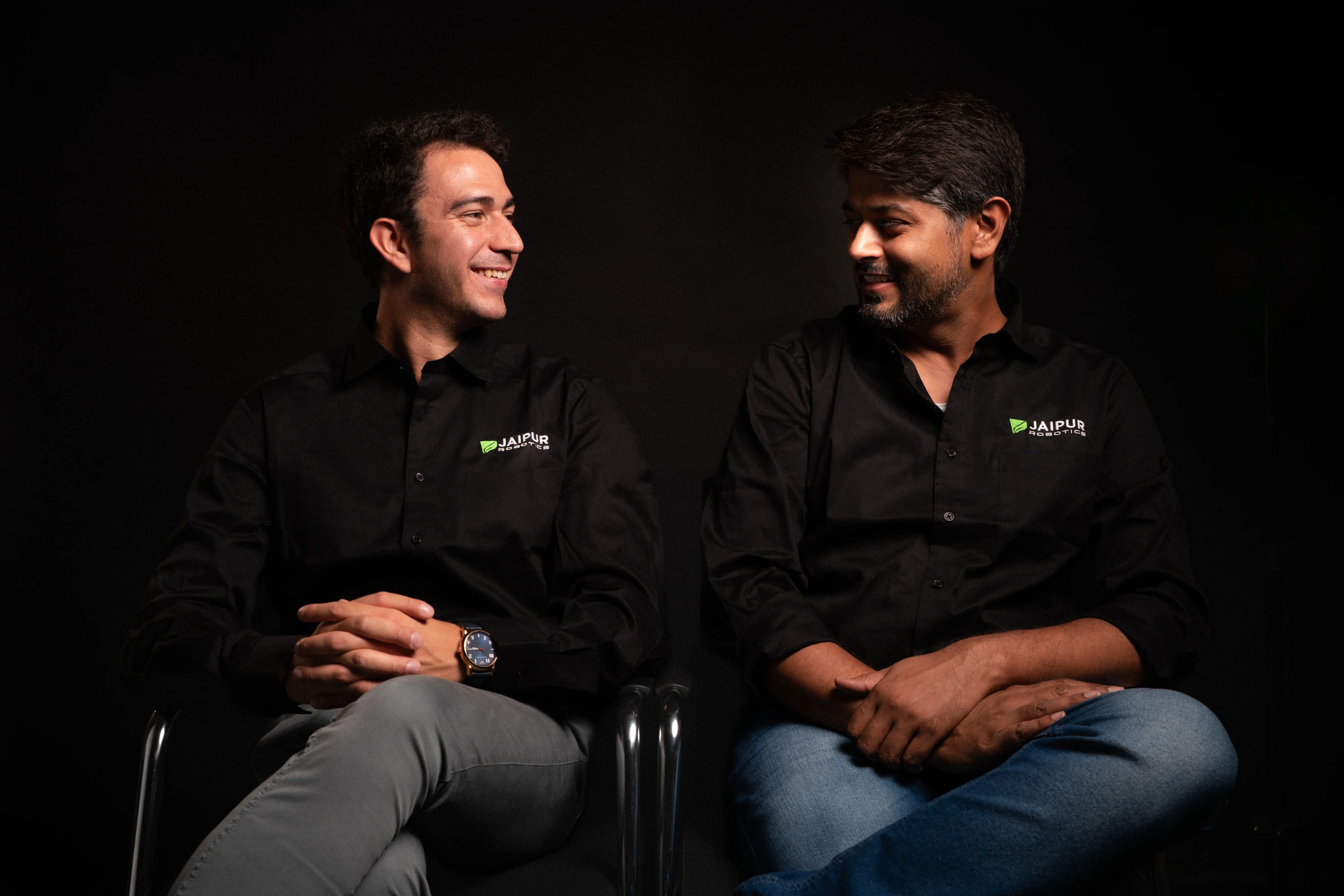
Today, the company’s team includes the two co-founders, two direct employees in Switzerland, and four more abroad. Ermes and Nikhil aren’t developing their product and building their business in Switzerland by accident: the small country is a giant in waste-to-energy. Ermes describes Swiss plants as some of the most advanced in the world; innovative and open to new technologies.
Silvan Gehmann, Investment Manager at EquityPitcher, ran into Jaipur when he was researching companies in the recycling business. Jaipur fit the portfolio well: it’s early-stage, yet it has already found a product-market fit and good customers. Jaipur also isn’t easily replaced by another AI company: it builds on top of a lot of proprietary data from working with customers.
EquityPitcher tipped High-Tech Gründerfonds about Jaipur. Anna Stetter, Investment Manager at HTGF, explains that industrial technology is one of HTGF’s investment pillars, so Jaipur fits the bill. The young company also ticked two important boxes: a competent founding team with traction and a large and growing, yet underserved market. Jaipur’s offer is simply a no-brainer for the customers, Anna explains. She is already looking forward to introducing Jaipur to the fund’s connections in the waste-to-energy market.
Silvan is a salesman at heart, and he recognizes a fellow sales talent. “Whenever I call Ermes, he says he’s with a customer and will get back to me later”, Silvan laughs. “I’ve told him he can take all the time he needs as long as he’s talking to customers.” This is the kind of attitude and grit that makes an investor feel confident in a founder, Silvan explains.
Strengthening sales and other organizational functions through proper processes is one of Jaipur’s focus areas after the fundraise. Regardless of personal talent, the CEO of a growing company needs good processes as well as someone to delegate to.
Jaipur’s second focus area is product development. The company’s current solution doesn’t only identify contaminants in the waste pile, it also maps the calorific value of the pile and guides crane operators on how to mix it for more stable combustion. This improves the plant’s energy output. The company is already running a pilot of fully autonomous crane operation and has partnerships with four crane manufacturers, including the largest in the world. Ermes won’t have to knock on every individual plant’s door when a commonly used crane fitted with Jaipur’s technology brings the solution to all of them at once.
Furthermore, as European emissions regulations increasingly require plants to keep tabs on what they’re burning, Jaipur’s system can analyze the composition of each incoming delivery, truck by truck. Instead of relying on manual samples that may or may not reflect the full load, plants suddenly have hard data on what they’re receiving from their partners.
Jaipur is building toward an intelligence layer over the entire waste-to-energy process, from where the waste enters the facility to where the fuel gas goes out from the chimney, Ermes describes. This is more than a product feature; it’s a way to add value at every step of the process, he envisions.
Waste-to-energy is only Jaipur’s first vertical, Ermes says. Identifying contaminants in a large amount of heterogeneous material is a surprisingly common challenge. This potential for expansion also attracted EquityPitcher, Silvan says.
From the first wastebin idea to expanding across industries, Ermes has learned how important it is to talk to the people he is developing for, instead of locking himself up in a lab until the perfect product comes out. Adapting to market needs doesn’t mean abandoning your own passion: Ermes gets to reduce waste because he knows what makes a difference in the real world.
Ermes and Nikhil named the company after the capital of Rajasthan, one of the largest states in India. Ermes fell in love with the warm and colorful city at first sight. He wanted to combine this soft, human element with the hard engineering side; ergo, Jaipur Robotics. Ermes even named his dog Jaipur – and Jaipur the dog is listed on the company website as Chief Happiness Officer.
“I think everyone has the choice in how they spend their time and effort”, Ermes summarizes. “This is where I want to put my energy.”